
Canal Construction — Hanson Rd to Chudy Rd
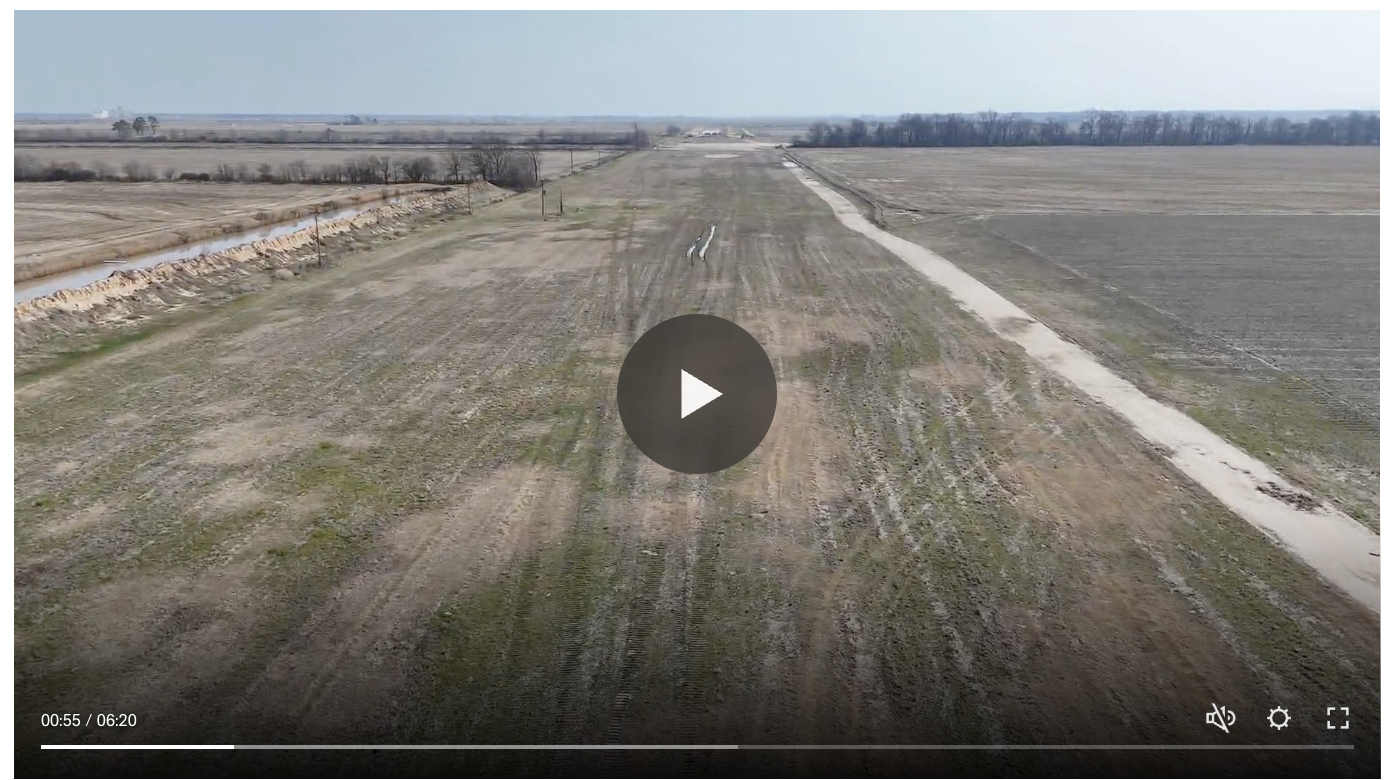
This segment of the district’s main canal is currently under construction. When completed, the canal will carry surface water across the Grand Prairie, forming the backbone of the irrigation system that delivers water to farms throughout the region.
Canal Construction — Hanson Rd to Chudy Rd This segment of the district’s main canal is currently under construction. When completed, the canal will carry surface water across the Grand Prairie, forming the backbone of the irrigation system that delivers water to farms throughout the region.
Engineering Beneath the Surface: The Pipeline Crossing
Installing an Irrigation Pipeline Beneath the Interstate in Hazen
To move water across the Grand Prairie without disrupting major infrastructure, the White River Irrigation District uses a method that allows pipelines to pass beneath highways without digging them up. In Hazen, where the system must cross under the interstate, this approach is essential, as state regulations do not allow excavation that would interrupt traffic or damage the roadway.
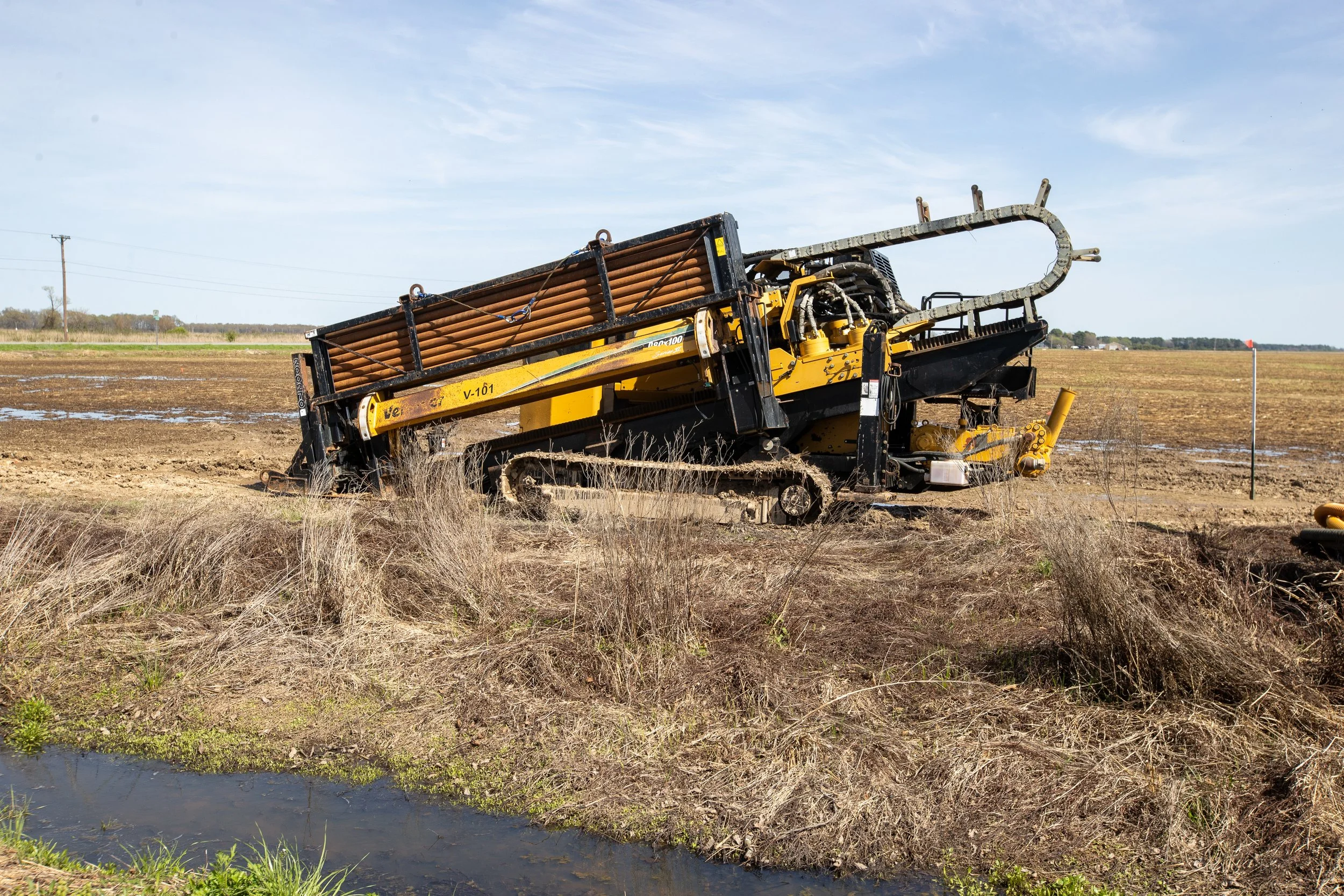
Instead of trenching, crews use a horizontal boring process. A boring machine is set on one side of the interstate and drills underground to the opposite side, creating a controlled path beneath the road. Once the initial bore is complete, the opening is gradually enlarged using specialized reaming equipment until it reaches the required diameter.
A steel casing pipe—approximately 500 feet long and 36 inches in diameter—is then welded together and pulled through the enlarged bore. This casing acts as a protective sleeve beneath the interstate. Inside it, a smaller 24-inch irrigation pipeline is installed, which will ultimately carry water through the system.
This method allows the pipeline to pass safely under the interstate without disturbing the surface above. It protects both the roadway and the surrounding prairie landscape while ensuring uninterrupted water delivery for farms across the region.
Installing an Irrigation Pipeline Beneath the Interstate in Hazen
To move water across the Grand Prairie without disrupting major infrastructure, the White River Irrigation District uses a method that allows pipelines to pass beneath highways without digging them up. In Hazen, where the system must cross under the interstate, this approach is essential, as state regulations do not allow excavation that would interrupt traffic or damage the roadway.
Instead of trenching, crews use a horizontal boring process. A boring machine is set on one side of the interstate and drills underground to the opposite side, creating a controlled path beneath the road. Once the initial bore is complete, the opening is gradually enlarged using specialized reaming equipment until it reaches the required diameter.
A steel casing pipe—approximately 500 feet long and 36 inches in diameter—is then welded together and pulled through the enlarged bore. This casing acts as a protective sleeve beneath the interstate. Inside it, a smaller 24-inch irrigation pipeline is installed, which will ultimately carry water through the system.
This method allows the pipeline to pass safely under the interstate without disturbing the surface above. It protects both the roadway and the surrounding prairie landscape while ensuring uninterrupted water delivery for farms across the region.
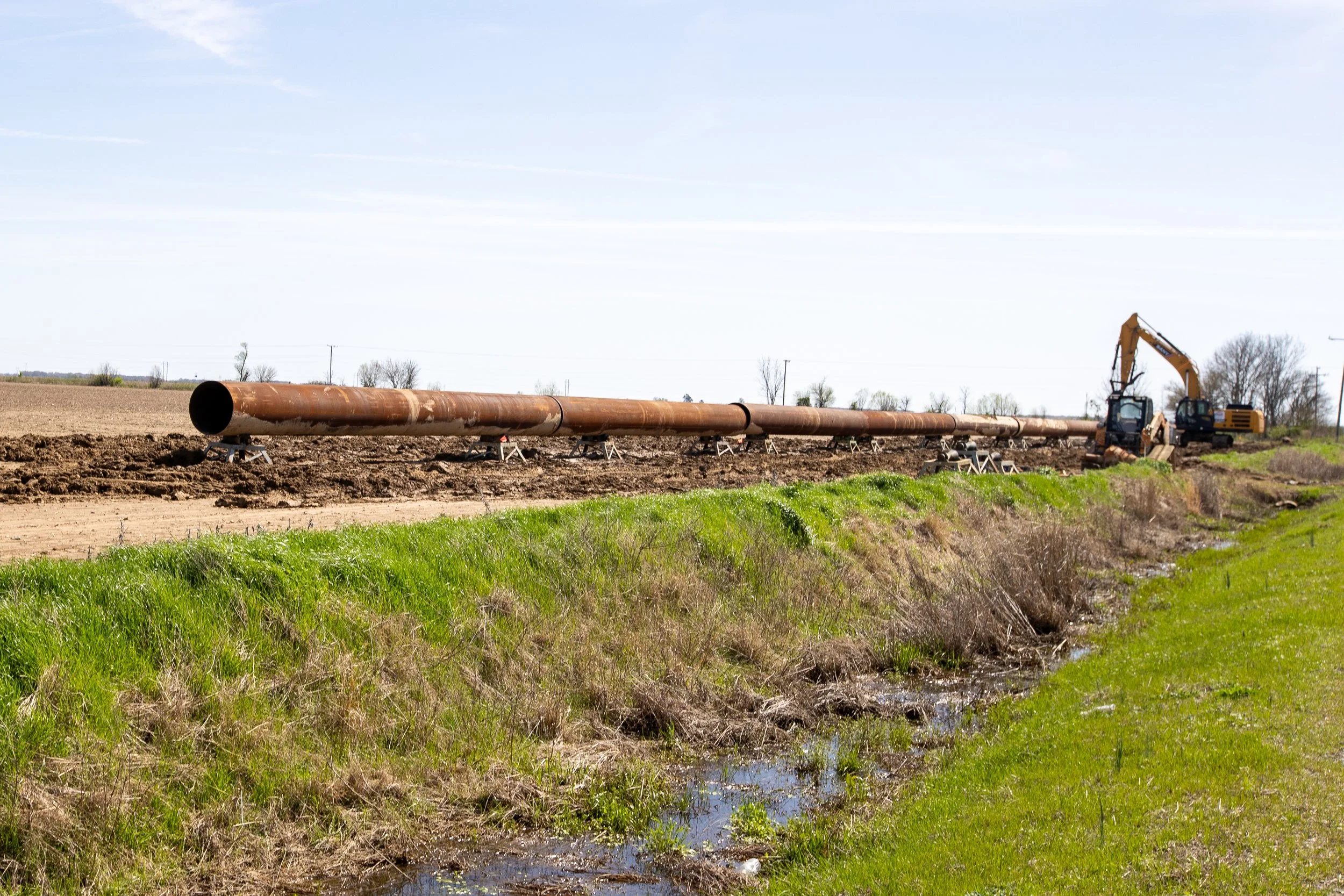
Steel casing pipe sections, each welded together to form a continuous 500-foot line, are staged before being installed beneath the interstate.
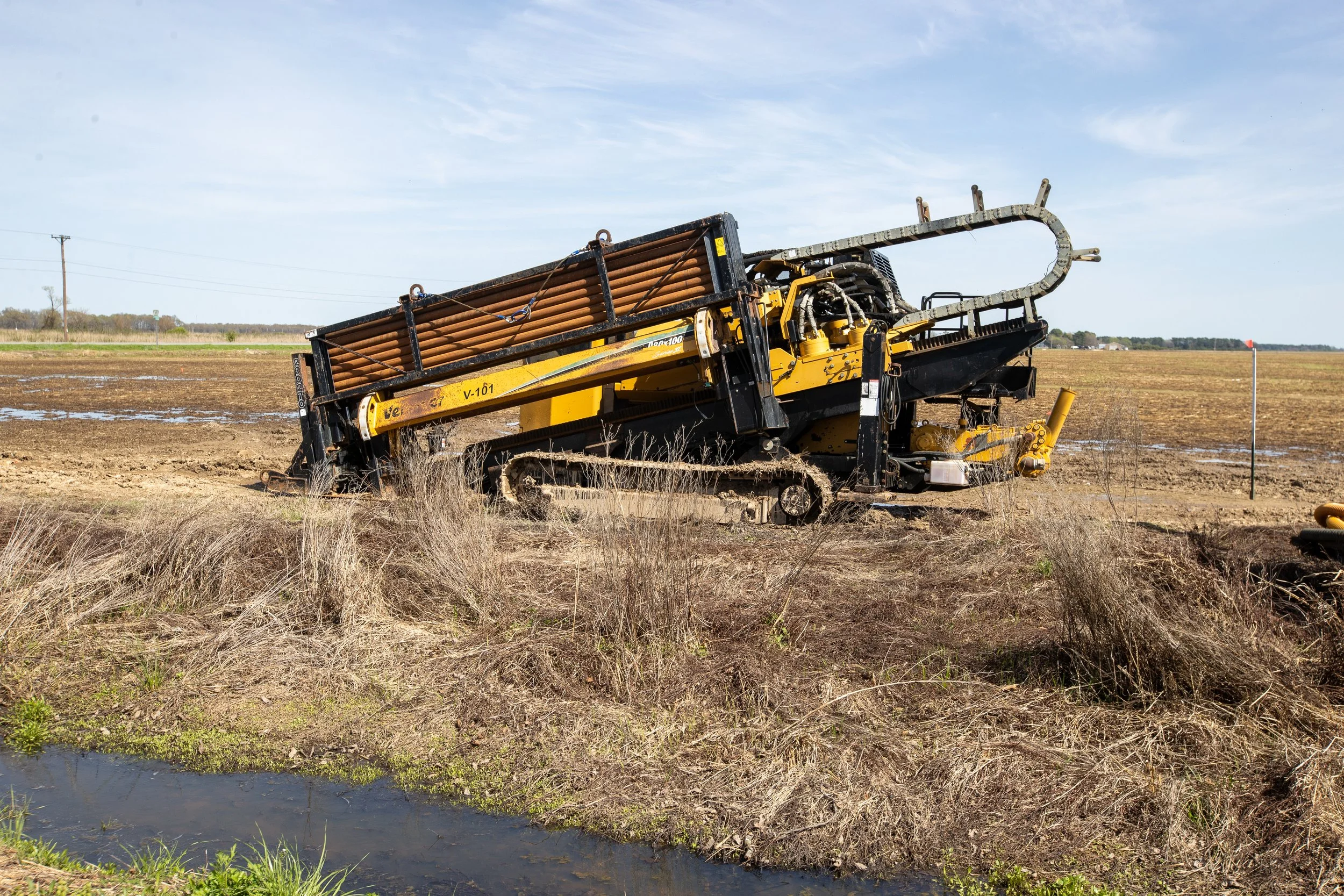
A horizontal boring machine drills beneath the roadway, creating a path for the pipeline without disturbing the surface above.
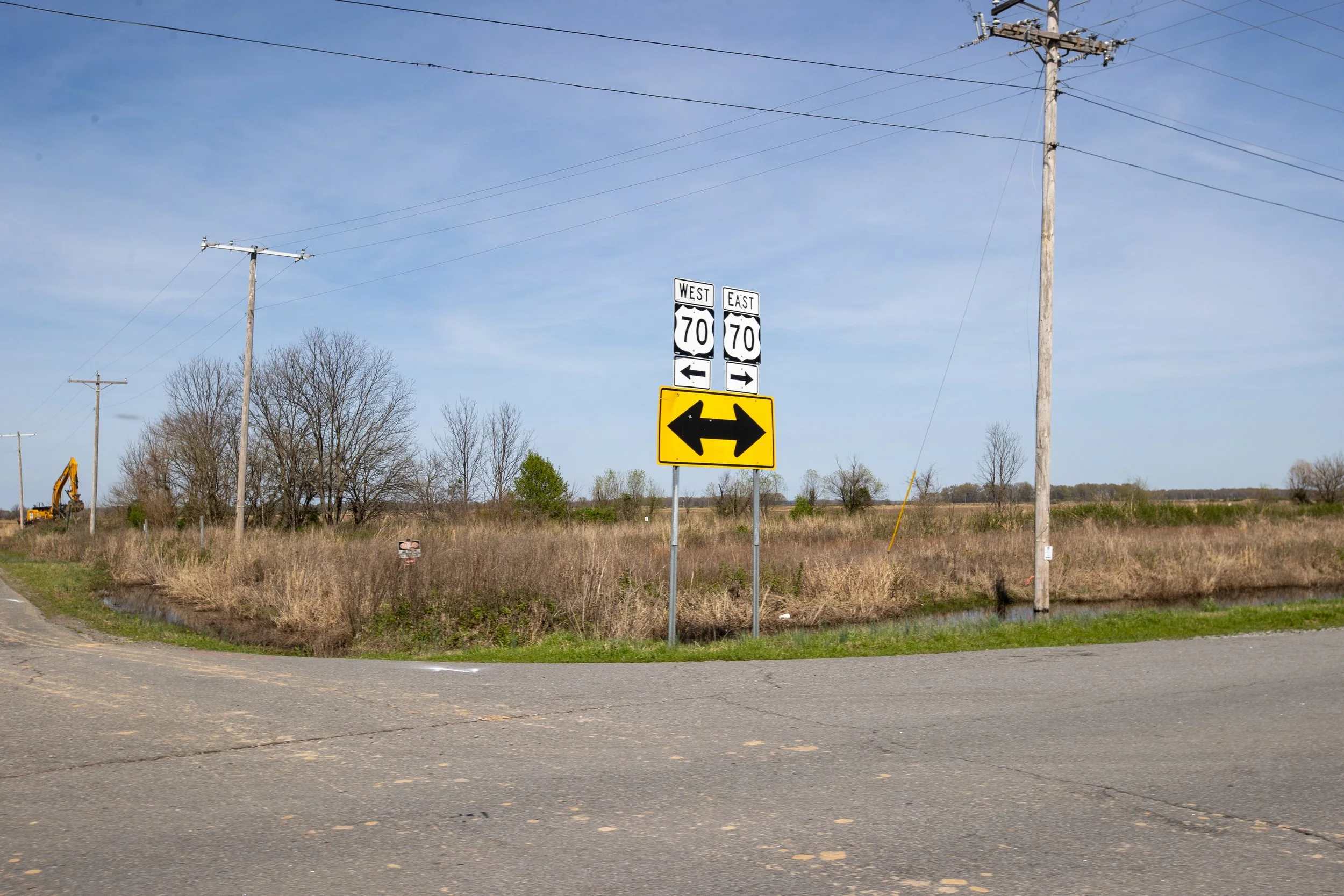
The pipeline route crosses beneath Highway 70 near Hazen, allowing water to move through the landscape without impacting traffic or the surrounding prairie.
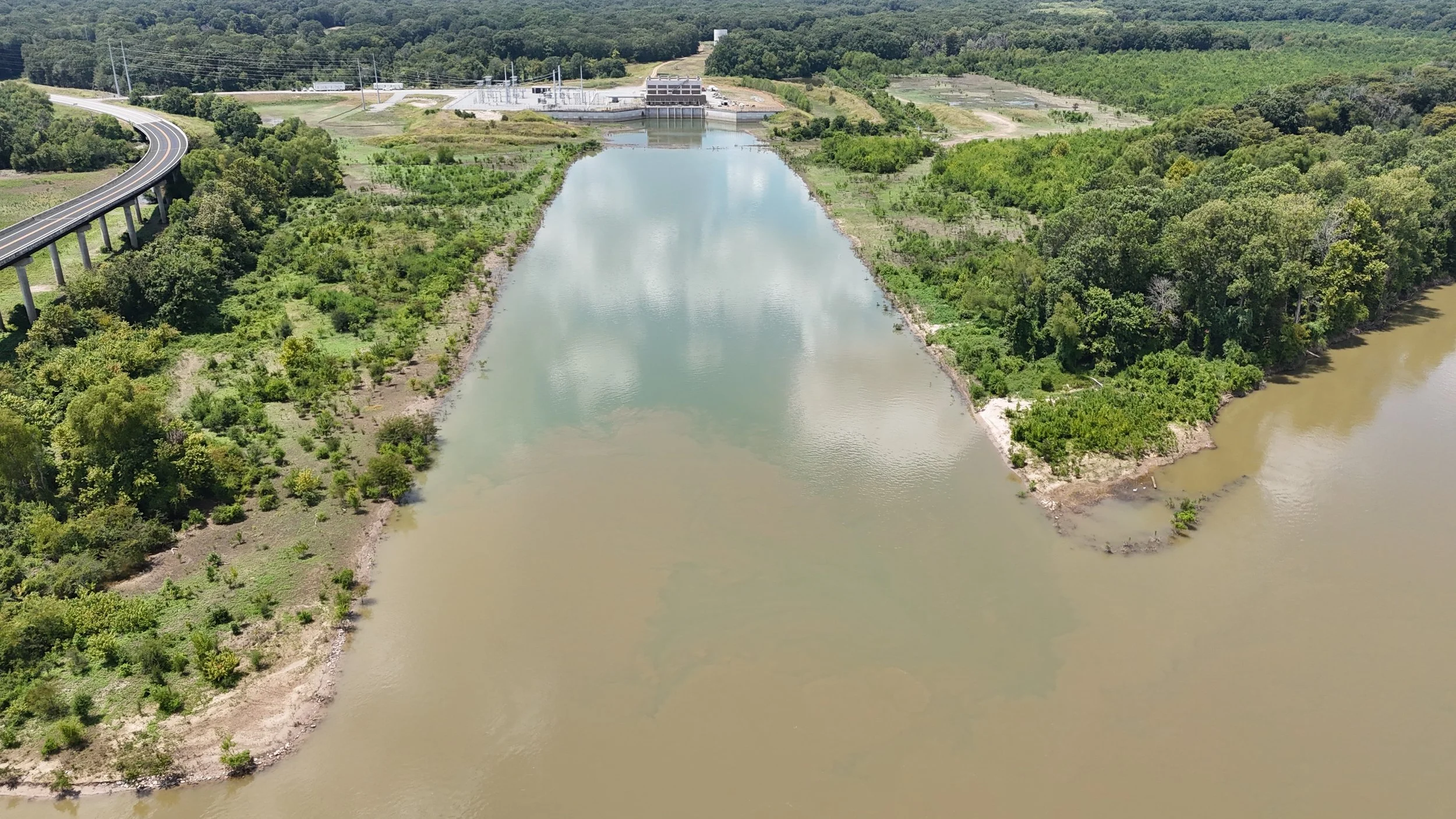
Project Update: Inlet Channel Contract Advances Construction
March 2026
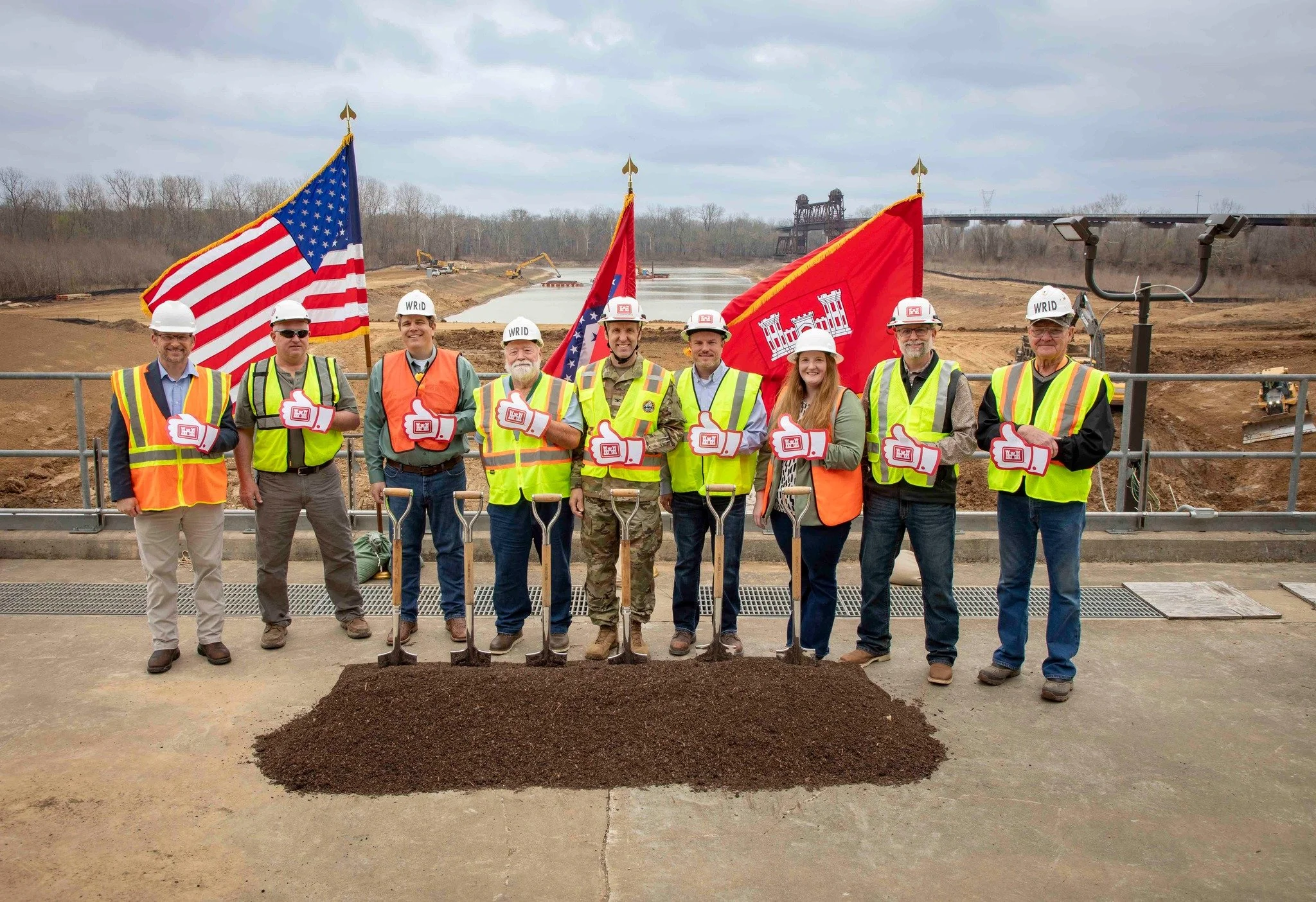
The U.S. Army Corps of Engineers Memphis District has awarded a $6 million contract to complete the Grand Prairie inlet channel near DeValls Bluff. This work is a key step toward beginning water delivery for the irrigation system.
The project will move water from the White River into a network of canals serving farmland across Prairie, Lonoke, Arkansas, and Monroe counties. Initial delivery is expected during the 2026 irrigation season, with roughly 40,000 acres included in the first phase.
Construction is moving forward on several major components. The pump station is being refurbished, motors are being completed, and the power substation is in place. A pipeline and regulating reservoir at Webb Lake have already been constructed and will help move water into the system.
The project is designed to reduce reliance on the declining alluvial aquifer by providing a long-term surface water source for agriculture in the region.
Additional phases will continue to expand the system over time, with full completion anticipated in the coming years.
March 2026
The U.S. Army Corps of Engineers Memphis District has awarded a $6 million contract to complete the Grand Prairie inlet channel near DeValls Bluff. This work is a key step toward beginning water delivery for the irrigation system.
The project will move water from the White River into a network of canals serving farmland across Prairie, Lonoke, Arkansas, and Monroe counties. Initial delivery is expected during the 2026 irrigation season, with roughly 40,000 acres included in the first phase.
Construction is moving forward on several major components. The pump station is being refurbished, motors are being completed, and the power substation is in place. A pipeline and regulating reservoir at Webb Lake have already been constructed and will help move water into the system.
The project is designed to reduce reliance on the declining alluvial aquifer by providing a long-term surface water source for agriculture in the region.
Additional phases will continue to expand the system over time, with full completion anticipated in the coming years.