
Project History & Media Archive
-
Rice production began expanding across Arkansas’s Grand Prairie in the early 1900s as farmers developed irrigation systems that relied heavily on groundwater from the Alluvial Aquifer. Today Arkansas produces roughly half of all rice grown in the United States, with much of that production centered in the Grand Prairie region. Decades of groundwater pumping helped build one of the most productive agricultural regions in the country but also led to long-term declines in aquifer levels.
-
Concerns about groundwater depletion led to federal studies beginning in the late 1940s, when the U.S. Army Corps of Engineers evaluated irrigation and water supply options for the Grand Prairie and Bayou Meto Basin. In 1950, Congress authorized the Grand Prairie Area Demonstration Project through the Flood Control Act of 1950. Over the following decades, engineers and researchers conducted environmental studies, groundwater modeling, and engineering design to develop a system capable of delivering surface water from the White River to farms across eastern Arkansas.
-
Construction of the modern irrigation system began in the 2020s following decades of planning and environmental review. The project includes canals, pipelines, and the Grand Prairie Pumping Station near DeValls Bluff, which will lift water from the White River into the distribution system. When fully operational, the system will deliver irrigation water across tens of thousands of acres of farmland, reducing pressure on the declining Alluvial Aquifer while supporting the long-term sustainability of agriculture in the region.
The White River Irrigation District project is part of the Grand Prairie Area Demonstration Project. This multi-phase water infrastructure effort was designed to deliver surface water from the White River to farms across eastern Arkansas. Developed in response to decades of groundwater decline in the Mississippi River Valley Alluvial Aquifer, the project aims to secure a sustainable water supply for agriculture in the Grand Prairie, one of the most productive rice-growing regions in the United States.
The timeline below highlights key historical events, research milestones, and construction progress that shaped the development of the irrigation system.

-
The Grand Prairie region of eastern Arkansas is widely known as the Rice and Duck Capital of the World. The flooded rice fields that cover the prairie each growing season also provide important habitat for migratory waterfowl traveling the Mississippi Flyway. Each winter, thousands of ducks gather in the region, drawing hunters and conservationists from across the country.
-
Rice farming transformed the Grand Prairie landscape, but it also created one of the most important waterfowl habitats in the Mississippi Flyway. After harvest, leftover rice grain in flooded fields provides a rich food source for migrating ducks and geese traveling south for the winter. Today millions of birds pass through eastern Arkansas each year, making the region a globally recognized waterfowl destination.
-
Duck hunting traditions in the Grand Prairie date back to the early twentieth century. In 1936, Stuttgart hosted the first National Duck Calling Contest, an event that eventually became the World Championship Duck Calling Contest. The contest is still held each year during the Wings Over the Prairie Festival, which celebrates the region as one of the premier waterfowl hunting destinations in North America.
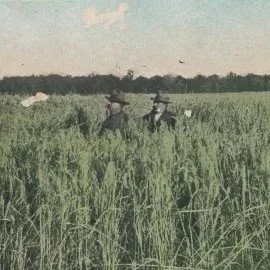
Rice field at Stuttgart (Arkansas County); 1909.
Agricultural History of the Grand Prairie
Rice Farming in Arkansas
Rice has been part of Arkansas’s agricultural history for more than two centuries. In 1819, English naturalist Thomas Nuttall recorded one of the earliest references to rice cultivation while visiting Arkansas Post, noting that rice had been “tried on a small scale” and showed promising results.
Modern rice farming in Arkansas began at the turn of the twentieth century. After studying successful rice operations in Louisiana, farmer W. H. Fuller introduced large-scale rice production near Carlisle and Stuttgart in 1906–1907. His success helped transform the region’s agriculture and encouraged other farmers to adopt the crop.
Advances in irrigation, mechanization, and agricultural science throughout the twentieth century dramatically increased production. Today, Arkansas leads the nation in rice production, growing nearly half of the rice produced in the United States across more than one million acres.
Rice remains a cornerstone of the state’s agricultural economy and was officially designated Arkansas’s state grain in 2007.
'Threshing Rice on J. F. Sims Hay Co.\u0027s Farm Hazen, Ark.' postcard, photo from The Art Studio, collection of Historic Arkansas Museum, 2009.26.1
-
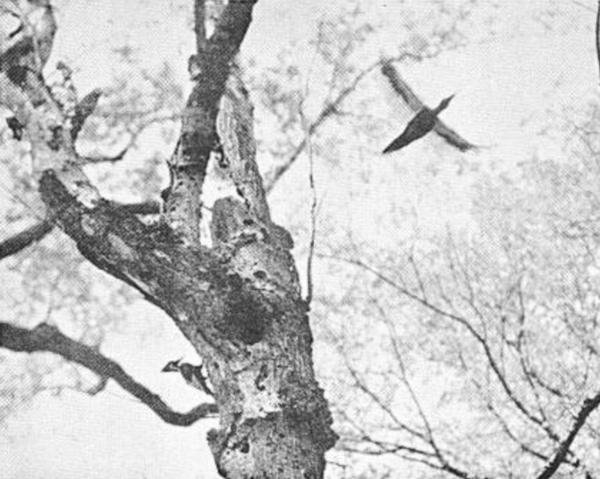
Search for the Ivory-billed Woodpecker — Cache River National Wildlife Refuge (2005)
After reports that the presumed-extinct Ivory-billed Woodpecker had possibly been sighted in eastern Arkansas, scientists and journalists searched the forests of the Big Woods region. The sighting prompted additional environmental review that temporarily slowed progress on the Grand Prairie irrigation project. -
Long before European settlement, the Grand Prairie region was home to Native American societies, including the Plum Bayou culture, which lived in eastern Arkansas between 650 and 1050 CE. These communities built ceremonial mound centers and farmed crops such as squash, sunflower, and native grains while hunting and gathering in the forests and river valleys of the White and Arkansas rivers.
-
Large-scale rice farming in Arkansas began on the Grand Prairie in 1897, when farmer William H. Fuller successfully planted rice using groundwater irrigation. The crop proved extremely profitable and triggered what locals called “rice fever.” Within a few decades the prairie landscape was rapidly converted to farmland, and by the early 1900s Arkansas was on its way to becoming the leading rice-producing state in the country.
Project Timeline
Before 1800
Native Prairie Landscape. Before large-scale settlement, the Grand Prairie region of eastern Arkansas was a vast tallgrass prairie covering roughly 900,000 acres. The landscape was dominated by grasses such as big bluestem and Indiangrass, with few trees due to the region’s dense clay soils. Today, less than one percent of the original prairie remains, as most of the land was eventually converted to agriculture.
Regional History of the Grand Prairie
A comprehensive historical overview of the Grand Prairie region published by the Arkansas Heritage Commission documents the landscape, early settlement, and development of agriculture in eastern Arkansas. The resource describes how a vast native prairie ecosystem was gradually transformed into one of the most productive agricultural regions in the United States.
650–1050 CE
Native American Settlement. Long before European settlement, the region was home to Native American societies, including the Plum Bayou culture, which built ceremonial mound centers across eastern Arkansas. These communities farmed native crops and relied on the forests and wetlands of the White and Arkansas River basins.
1878
German Immigrants Found Stuttgart German immigrants founded the town of Stuttgart, Arkansas, in 1878. Early settlers raised cattle and harvested prairie hay before rice farming was introduced. Stuttgart would later become known as the Rice and Duck Capital of the World.
1897
The Arkansas Rice Boom. Large-scale rice farming began in Arkansas when farmer William H. Fuller successfully grew rice near Stuttgart using groundwater irrigation. The crop proved extremely profitable and triggered what locals called “rice fever.” Within a few decades, the Grand Prairie landscape was rapidly converted from prairie grassland to irrigated farmland.
Early 1900s
Rise of Irrigated Rice Agriculture. Rice farming expanded rapidly across Arkansas’s Grand Prairie in the early twentieth century as farmers developed irrigation systems powered by groundwater wells. Over time the region became the center of the American rice industry. Today, Arkansas produces nearly half of all rice grown in the United States, with much of that production concentrated in eastern Arkansas.
1948
Federal Irrigation Study: The U.S. Army Corps of Engineers completed a study evaluating irrigation and water supply options for the Grand Prairie and Bayou Meto Basin. The study examined the potential for delivering surface water from the White River to support agriculture in eastern Arkansas.
1950
Project Authorized by Congress: The Flood Control Act of 1950 authorized the Grand Prairie Area Demonstration Project, recognizing the need for long-term irrigation solutions in eastern Arkansas.More information:
https://en.wikipedia.org/wiki/Grand_Prairie_Area_Demonstration_Project
1950s
Modern Irrigation Technology Expands
After World War II, farmers across the Grand Prairie began installing thousands of irrigation wells powered by electric and diesel pumps. These wells allowed farmers to reliably flood rice fields but also led to increasing withdrawals from the Mississippi River Valley Alluvial Aquifer, setting the stage for future groundwater concerns.
Late 1900s
Groundwater Decline Decades of irrigation pumping significantly lowered groundwater levels in the Mississippi River Valley Alluvial Aquifer, the primary water source for farms in eastern Arkansas. In parts of the Grand Prairie, groundwater levels declined more than 100 feet, raising concerns about the long-term sustainability of irrigation in the region.
1980s
Aquifer Decline Recognized
By the 1980s, scientists and agricultural leaders began warning that groundwater levels in the Alluvial Aquifer were declining across the Grand Prairie due to decades of irrigation pumping. Studies conducted by federal and state agencies helped highlight the need for a long-term surface water solution.
1999
Environmental Impact Statement: The U.S. Army Corps of Engineers completed a comprehensive Environmental Impact Statement evaluating the proposed irrigation system.https://erdc-library.erdc.dren.mil/items/95c02daa-81bf-44aa-98d2-81229f618ed2
2000
Record of Decision: Federal officials approved the selected project plan to deliver surface water from the White River to farms across the Grand Prairie region.
2004–2010
Environmental Assessments and Project Planning. Additional environmental assessments and engineering studies refined the irrigation system design and confirmed the feasibility of delivering surface water across the region. Environmental Assessment (2004)
https://www.mvm.usace.army.mil/Portals/51/docs/missions/projects/Grand%20Prairie%20Area%20Demonstration%20Project/Final%202004%20EA.pdfEnvironmental Assessment Update (2010)
https://erdc-library.erdc.dren.mil/bitstream/11681/36433/1/Grand%20Prairie%20Area%20Demostration%20Project%202010%20EA.pdf
2004–2005
Ivory-billed Woodpecker Environmental Review (2004–2005)
Reports of a possible sighting of the Ivory-billed Woodpecker prompted additional environmental review of the Grand Prairie irrigation project. The need for habitat studies and federal consultation temporarily slowed project planning and development in the region.
2004–2010
Wetland Mitigation and Federal Permitting
Because the irrigation system crosses large areas of bottomland habitat, portions of the project required extensive federal permitting and wetland mitigation planning under the Clean Water Act. Environmental studies and coordination between the U.S. Army Corps of Engineers, federal wildlife agencies, and state regulators were required to ensure that wetlands and wildlife habitats were protected. These reviews added time to the planning process but helped shape the final design of the irrigation system.
2009
Public Awareness Video: Arkansas Farm Bureau released an early video explaining the irrigation project and the need to reduce reliance on declining groundwater supplies.https://www.youtube.com/watch?v=kKsa-uFvy48
2021
Construction Begins: Federal, state, and agricultural partners began construction of the irrigation system designed to deliver White River surface water across the Grand Prairie. The system includes canals, pipelines, and the Grand Prairie Pumping Station near DeValls Bluff.
2024
Major Infrastructure Construction Construction continues on canals, pipelines, and pump infrastructure that will move water from the White River into the irrigation distribution system.https://www.youtube.com/watch?v=8phoOGSiyNk
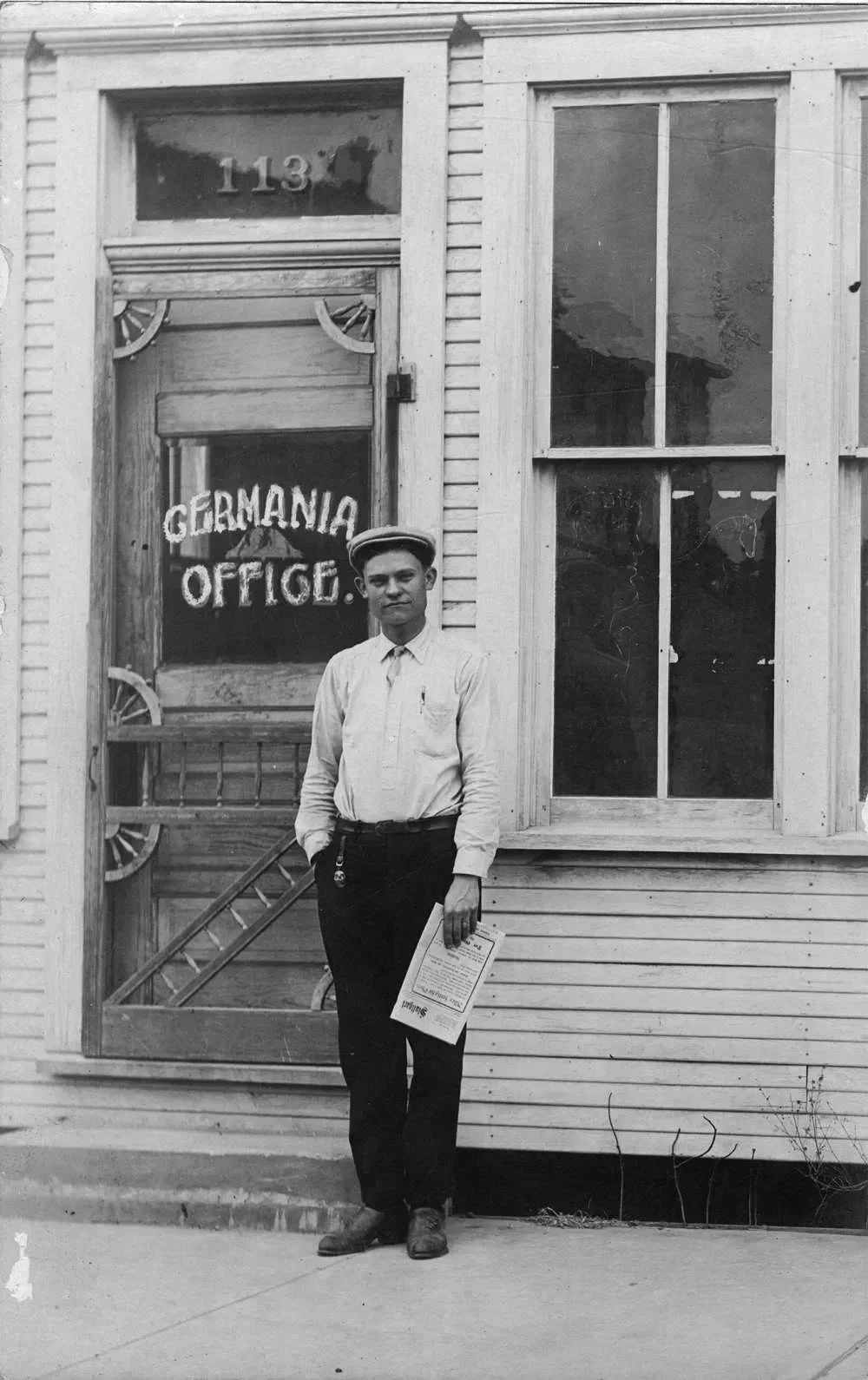
Unidentified man standing in front of the Stuttgart Germania newspaper office in Stuttgart (Arkansas County); 1913.

The World Championship Duck Calling Contest began in 1936 in Stuttgart during the Arkansas Rice Carnival. Held each Thanksgiving weekend, the event celebrates the region’s long connection between rice farming, waterfowl hunting, and life on the Grand Prairie.
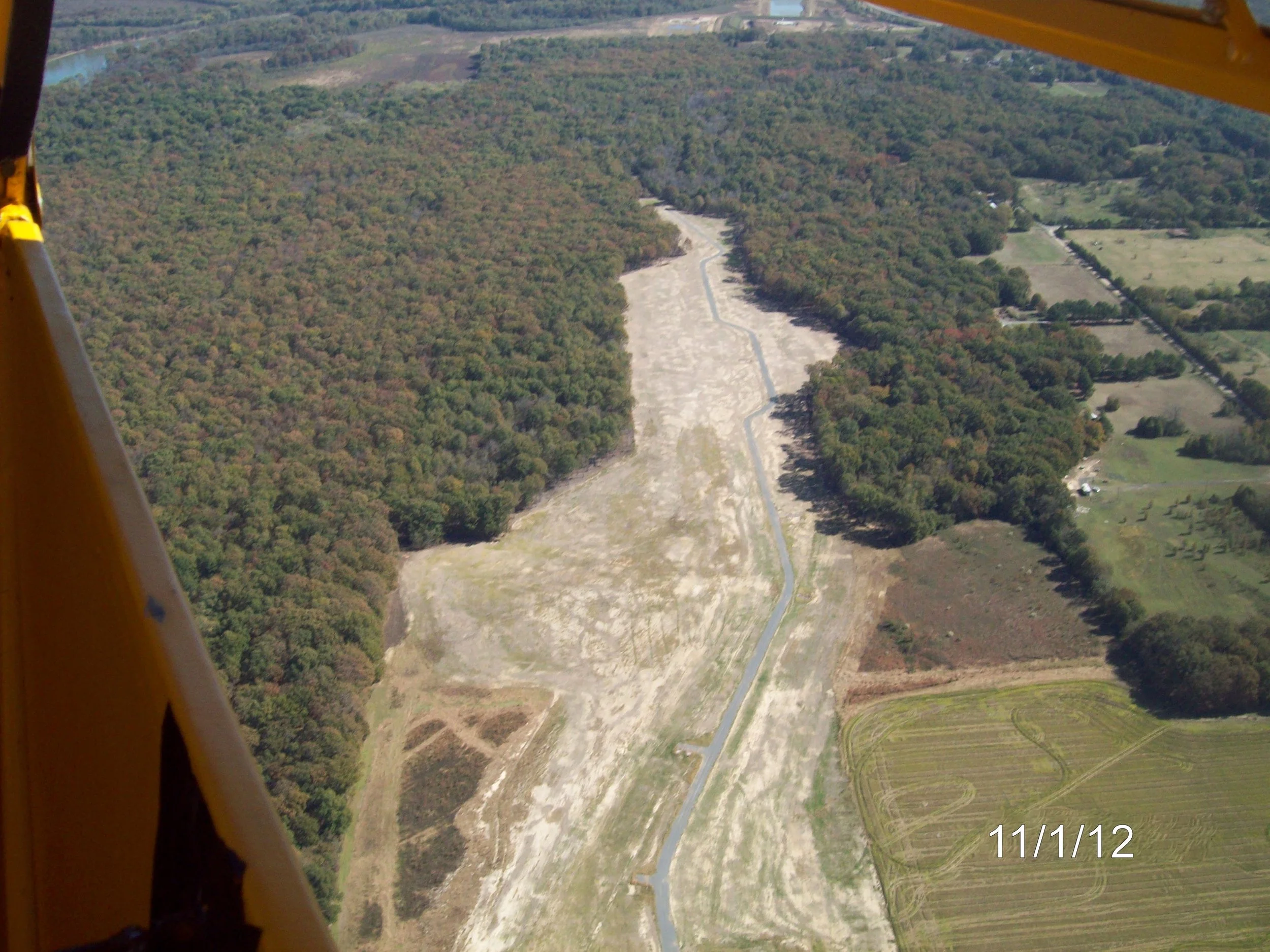
Grand Prairie Irrigation Corridor — 2012
Aerial view of the proposed irrigation route in eastern Arkansas.
Photo: Dennis Carman
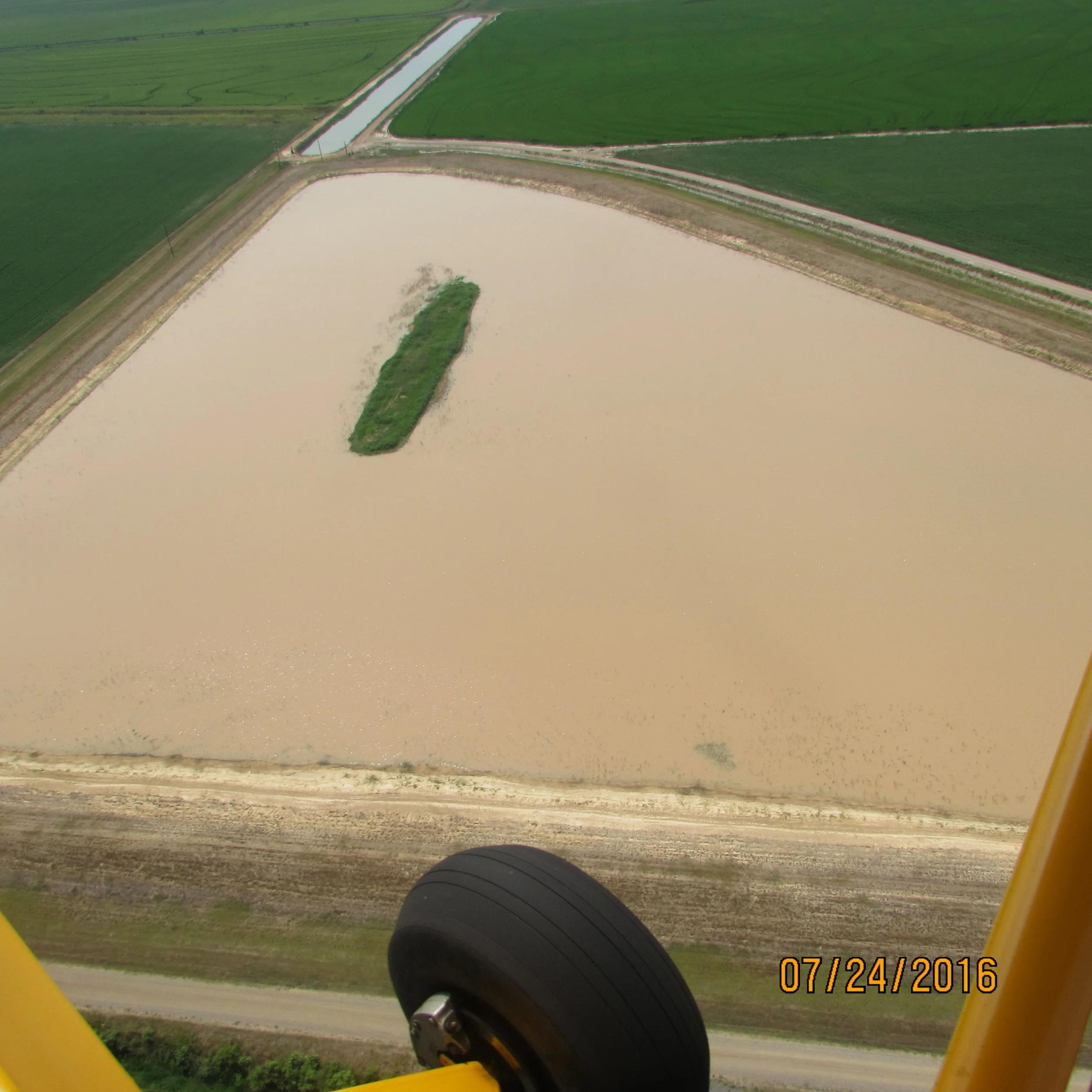
Grand Prairie Irrigation Corridor — 2012
Aerial view of the proposed irrigation route in eastern Arkansas.
Photo: Dennis Carman
WRID is helping ensure that the Grand Prairie remains productive, resilient, and economically strong for decades to come.
Media Coverage
2006
Arkansas’ White River Irrigation District Wins Suit
Legal challenges surrounding the Grand Prairie irrigation project reached the Arkansas Supreme Court, which upheld a lower court decision allowing the project to proceed. The ruling came during a period of controversy involving environmental groups and the reported rediscovery of the Ivory-billed Woodpecker.
https://www.farmprogress.com/farm-business/arkansas-white-river-irrigation-district-wins-suit
2021
USDA NRCS and White River Irrigation District Hold Groundbreaking Ceremony
Federal and state officials joined project partners near DeValls Bluff to mark the beginning of construction on the canal system that will deliver White River surface water to farms across the Grand Prairie. The first phase will irrigate roughly 37,800 acres of farmland.
https://agcouncil.net/news/usda-nrcs-white-river-irrigation-district-hold-groundbreaking-ceremony/
2022
WRID Receives $5 Million for Road Crossings and Pump Station Work
Funding from the Arkansas Department of Agriculture supported construction of county road crossings and infrastructure needed to complete the Grand Prairie irrigation system near DeValls Bluff.
https://www.dewitt-ee.com/articles/5506/view
2023
Army Corps Commander Visits Grand Prairie Irrigation Project
U.S. Army Corps of Engineers leadership toured the pump station site and received updates on canal construction and project coordination with the White River Irrigation District.
https://www.dewitt-ee.com/articles/6411/view
2024
Eastern Arkansas Advances Multi-Million Dollar Canal Projects
Regional infrastructure work continues on the White River Irrigation District canal system designed to deliver surface water to roughly 250,000 acres of farmland in eastern Arkansas.
https://thewynneprogress.com/eastern-arkansas-advances-multi-million-dollar-canal-projects-to-support-agricultural-communities-wildlife-conservation/
2024
Entergy Substation to Power Grand Prairie Irrigation Project
Construction of a new electrical substation near DeValls Bluff will power the Grand Prairie Pumping Station, a critical component of the irrigation system delivering White River water to farms across the region.
https://www.marketscreener.com/quote/stock/ENTERGY-CORPORATION-12512/news/Entergy-New-Entergy-Arkansas-substation-will-help-power-Grand-Prairie-Irrigation-District-48525936/
2025
Grand Prairie Substation Completed Eight Months Early
The electrical substation that powers the pumping station was completed ahead of schedule, bringing the project closer to delivering irrigation water to farms across the Grand Prairie region.
https://transformers-magazine.com/tm-news/grand-prairie-substation-completed-eight-months-early/
2025
WRID Celebrates Electrical Substation Completion
Project partners celebrated the completion of the Grand Prairie Electrical Substation, an important milestone toward delivering irrigation water by 2026.
https://www.stuttgartdailyleader.com/wrid-celebrates-substation-completion-eight-months-ahead-of-schedule/
2025
Construction Progress Continues for WRID Project
Pipeline installation, highway crossings, and pump station improvements continued across the irrigation system as the project moves toward its planned water delivery date.
https://www.stuttgartdailyleader.com/2025-construction-progress-continues-for-wrid-project/