Native Prairie Grasses Along the Canal System
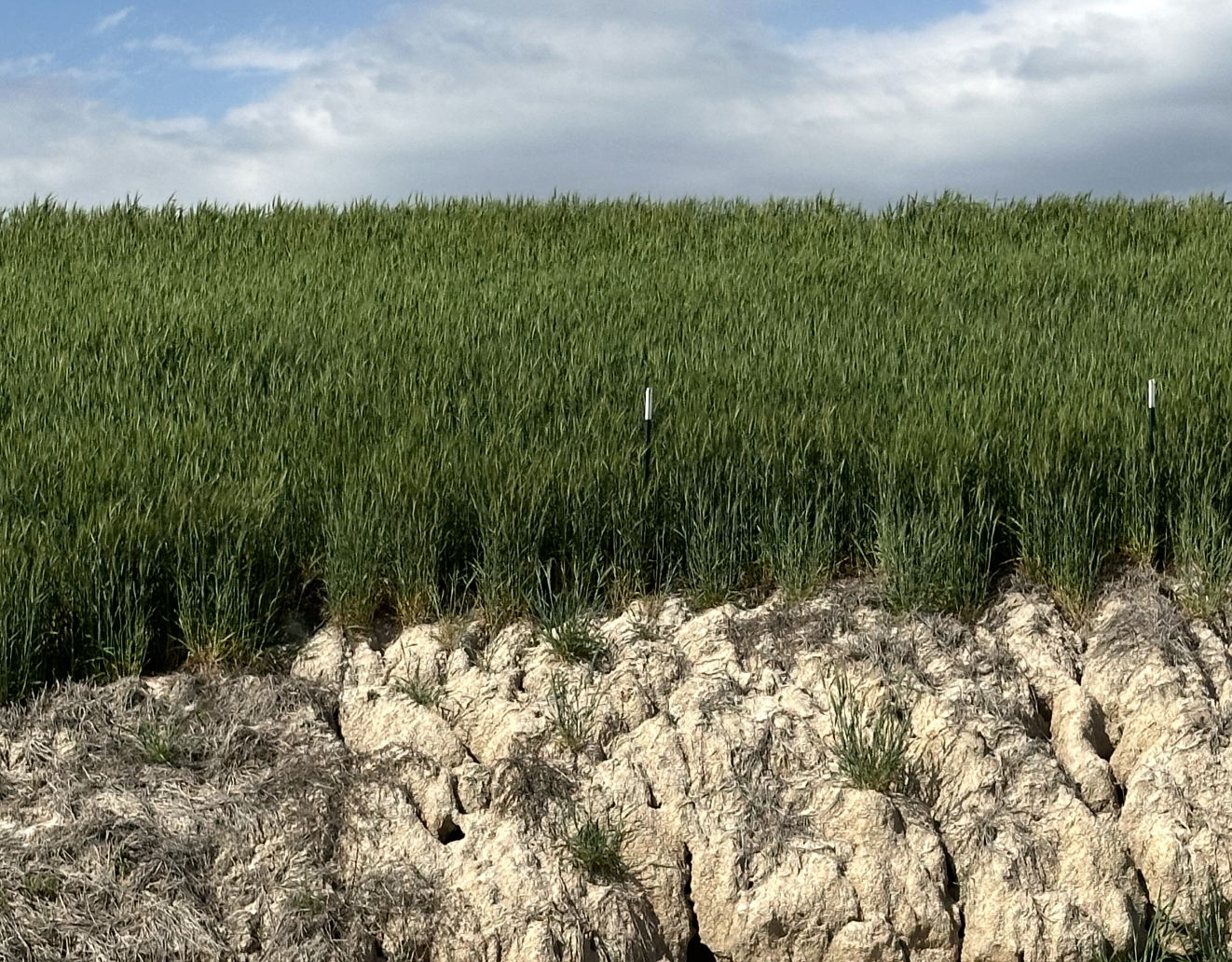
The White River Irrigation District incorporates native Arkansas Grand Prairie grasses along canal levees and rights-of-way as part of its environmental mitigation efforts.
These deep-rooted grasses help stabilize soil, protect canal infrastructure, and improve the long-term resilience of the irrigation system. Using native vegetation also restores elements of the landscape that once defined much of the Grand Prairie region.
Why Native Prairie Grasses Are Used
Native prairie grasses are well adapted to the soils and climate of eastern Arkansas. Their deep root systems help hold soil in place along canal levees and other infrastructure areas, reducing erosion over time.
Once established, these grasses require relatively little maintenance and provide durable vegetative cover along the district’s rights-of-way.
Prairie Grass Restoration Process
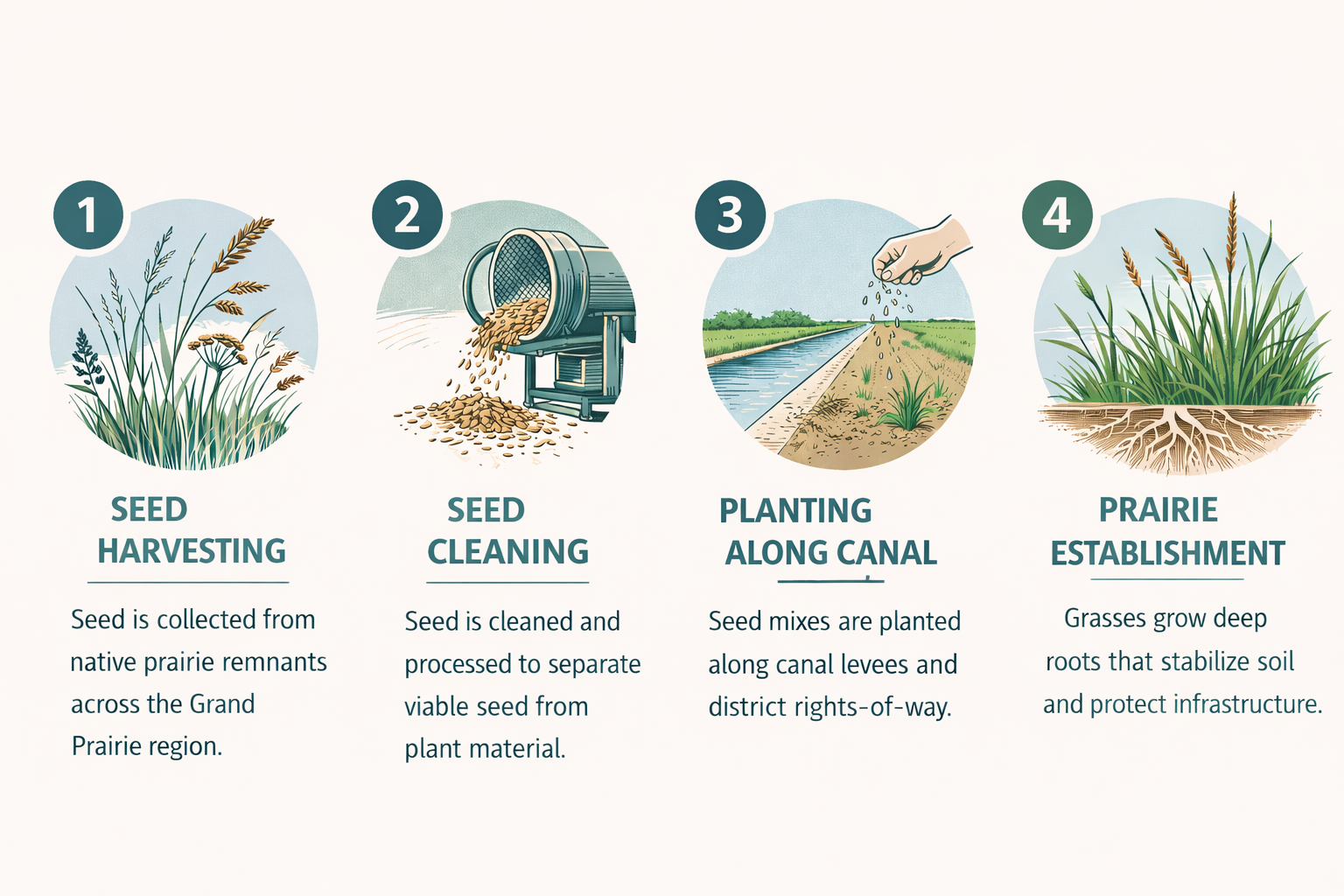
Native prairie grasses used along the canal system are established through a multi-step process that begins with locally harvested seed and continues through planting and long-term establishment along the district’s infrastructure.
Locally Harvested Seed
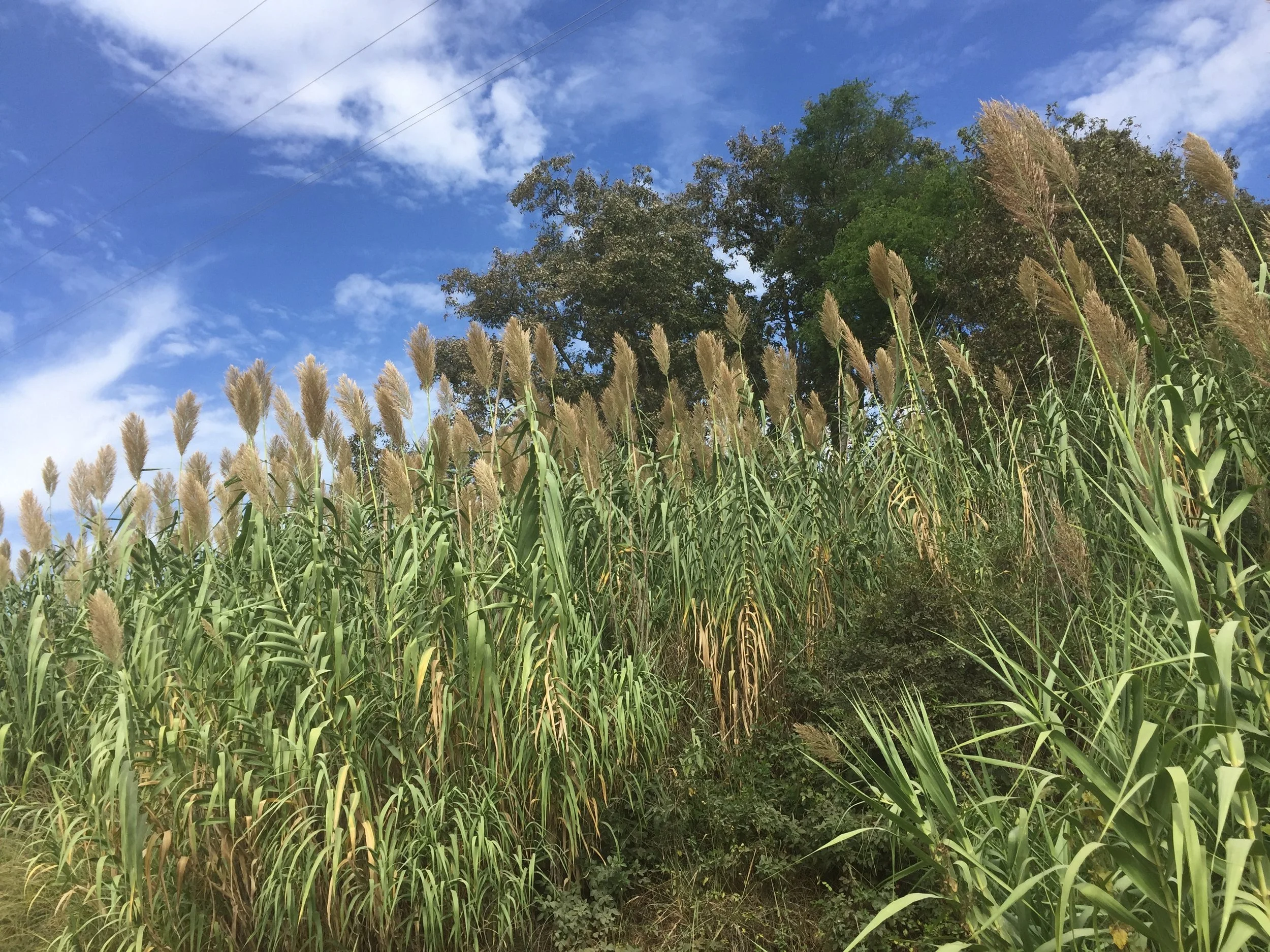
Seed used for prairie plantings is harvested locally from remaining prairie remnants throughout the region.
This approach helps preserve native plant genetics while supporting conservation of the Grand Prairie’s remaining prairie landscapes. Landowners who host prairie remnants maintain ownership and use of their property while participating in seed collection efforts.
Prairie Grass Restoration Process
Native prairie grasses used along the canal system are established through a multi-step process that begins with locally harvested seed and continues through planting and long-term establishment along the district’s infrastructure.